
What It's Like to Live in Yeonnam-dong: A Foreigner's Guide (2026)

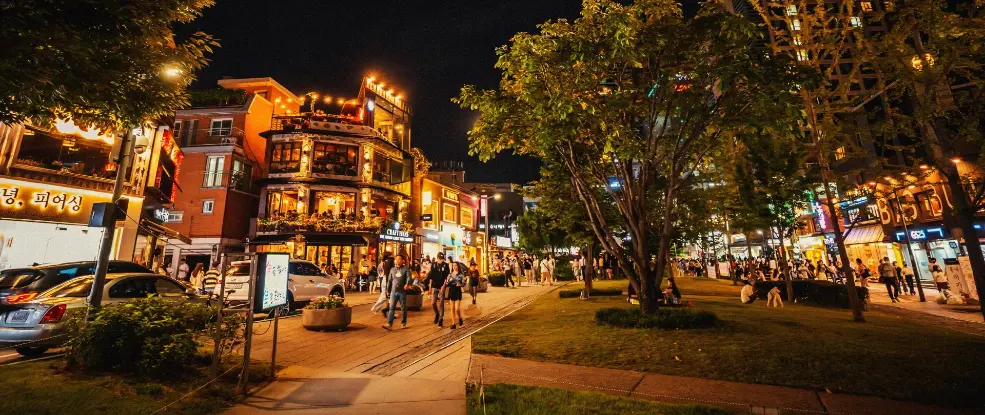
Yeonnam-dong is a small residential neighborhood in Seoul's Mapo-gu, sitting just north of Hongdae. Over the past decade it's become one of the city's most-liked places to live for foreigners, especially freelancers, students, and remote workers who want Seoul's creative side without the chaos of a nightlife district. Most guides treat Yeonnam-dong as a cafe-hopping day trip. This one is about what it's like to actually wake up here every morning.
Where is Yeonnam-dong, and what is it like?
Yeonnam-dong sits in the northwest of Seoul, in Mapo-gu, directly above the Hongdae area and a short walk from Hongik University Station. The whole neighborhood is tiny, barely 0.65 square kilometers, so you can walk from one end to the other in about 15 minutes.
The spine of it is the Gyeongui Line Forest Park, a long, thin green strip built on top of an old railway that was buried underground. Locals call it "Yeontral Park," a joke on Central Park. Most of the cafes and restaurants here are converted old houses, which is why each one feels a little different from the next.
Yeonnam only joined Mapo-gu in 1975, and for most of its life it was a plain residential pocket. The cafes and crowds are recent. Koreans often describe it as the calmer cousin of Hongdae: the same creative streak, far less of the 3am noise.
Who lives in Yeonnam-dong?
Yeonnam-dong draws a mix of young creatives, freelancers, students, and a growing number of long-term foreign residents. It's the kind of place people pick when they want to live somewhere with character but still get a good night's sleep.
Walk around on a weekday morning and you'll see kids heading to school and residents walking dogs along the park, not influencers chasing the next photo. There are families here, couples on quiet dates, people reading in cafes for three hours. It doesn't try as hard as Seongsu or Ikseon. That's the appeal.
A lot of foreigners in the area are studying Korean nearby. Sogang University sits inside Mapo-gu itself, and Yonsei and Ewha are just over the line in neighboring Seodaemun-gu, all a short ride away. Others are remote workers who treat the park and the cafes as their office.
How much does it cost to live in Yeonnam-dong?
A studio or small one-room in Yeonnam-dong typically rents for ₩700,000 to ₩1,100,000 per month, based on actual transactions registered with Korea's Ministry of Land in early 2026. For context, the average studio rent across Seoul was about ₩730,000 in mid-2025, and Mapo-gu posted the steepest studio-rent rise of any district that month. So Yeonnam sits at the middle-to-upper end of the studio market, not the bargain bin.
Most monthly rentals (wolse) also need a deposit of ₩5 million to ₩10 million. And here's a quirk worth knowing: in Korea, the deposit and the monthly rent trade off against each other. The same room can be listed at ₩400,000 a month with a big deposit, or ₩1,000,000 a month with a small one. So compare the full package, not just the headline rent.
On top of rent, budget for utilities and a management fee (관리비). In a small villa that fee is often close to nothing. In a newer officetel it can run ₩150,000 or more.
If you'd rather skip the deposit and the furniture hunt entirely, Cove runs furnished studios in Yeonnam-dong from around ₩1,000,000 a month, with wifi and housekeeping included and no large deposit.
What is daily life like in Yeonnam-dong?
Daily life in Yeonnam-dong revolves around the forest park and the small alleys that branch off it. The park is the neighborhood's living room. People picnic, walk dogs, and run errands along it all day.
Groceries and the everyday stuff are easy. Convenience stores sit on most corners, with small supermarkets for daily shopping. The neighborhood's own Dongjin Market is worth knowing, though not for the reason the name suggests. It was a traditional market once, but it's gentrified into a quiet, roofed alley of indie shops, cafes, and restaurants, and it only really comes alive on weekends, when pop-up stalls move in to sell handmade jewelry, vintage finds, and street food. For a proper traditional wet market with fresh produce, locals head to Mangwon Market one neighborhood over. For its size, Yeonnam punches above its weight on food, with Thai, Japanese, Chinese, and Western spots next to good Korean places, most of them small and independently run.
Evenings are calm. A popular local move is to grab a ₩2,500 beer from a convenience store and sit on a bench by the park. One thing to know: the park is ringed by homes, and Seoul has tightened its rules on public drinking, with fines of up to ₩100,000 for loud or disruptive drinking in designated zones. A quiet drink is fine. Just keep the noise down. The main streets stay lit and lively into the night, and the neighborhood feels safe to walk after dark.
Getting around Yeonnam-dong, and why not to bring a car
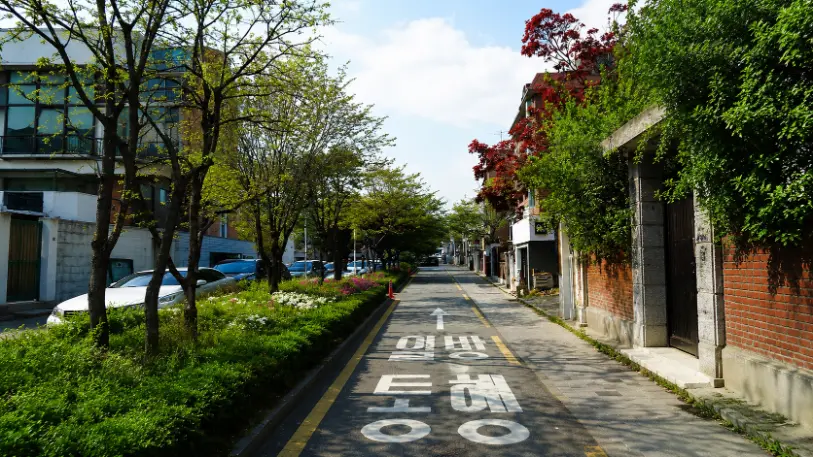
Yeonnam-dong is well connected by subway but rough for car owners. Hongik University Station, on the south edge, puts you on Line 2, the Gyeongui-Jungang Line, and the AREX airport line. The airport train that stops at Hongik is the all-stop service, which reaches Incheon Airport in about 50 minutes. (The faster nonstop express skips Hongik entirely and runs only from Seoul Station.) Most of what you need day to day is walkable or a short bike ride.
Driving is the catch. Parking here is rough even for residents, who'll tell you straight that there's nowhere to leave a car. The usual workaround is the paid lot at AK Plaza, the mall right by Hongik Station and the park entrance. To get a cheap full-day rate, locals pre-book a pass through a Korean parking app like Modu Parking (모두의주차장), which can run around ₩20,000. Drive up and pay the hourly rate instead, and a full day costs far more, often two to three times that. If you're choosing between neighborhoods and you own a car, factor this in before you sign.
The downsides of living in Yeonnam-dong
The main trade-offs in Yeonnam-dong are rising rents, weekend crowds, and aging buildings. Rents have been climbing for years as the area got popular, so it isn't the bargain it was in 2015.
Weekends bring tourists and day-trippers onto the main streets near the park, which can get busy and loud around the cafes. Step a few alleys back and it quiets down fast.
A lot of the housing stock is older villas. Before signing anything cheap, check the ventilation (some units vent the bathroom and kitchen into the hallway, so air doesn't move), look for signs of mold, and ask about summer bugs. One more thing to set expectations: Yeonnam is cafes and wine bars, not clubs. If you want real nightlife, that's what Hongdae next door is for.
Is Yeonnam-dong right for you?
Yeonnam-dong suits foreigners who want a calm, walkable base with cafes and character, and who don't need a car or a heavy nightlife scene on their doorstep. It's a strong fit for remote workers, students, and anyone doing a few months in Seoul who wants to feel settled rather than parked in a hotel.
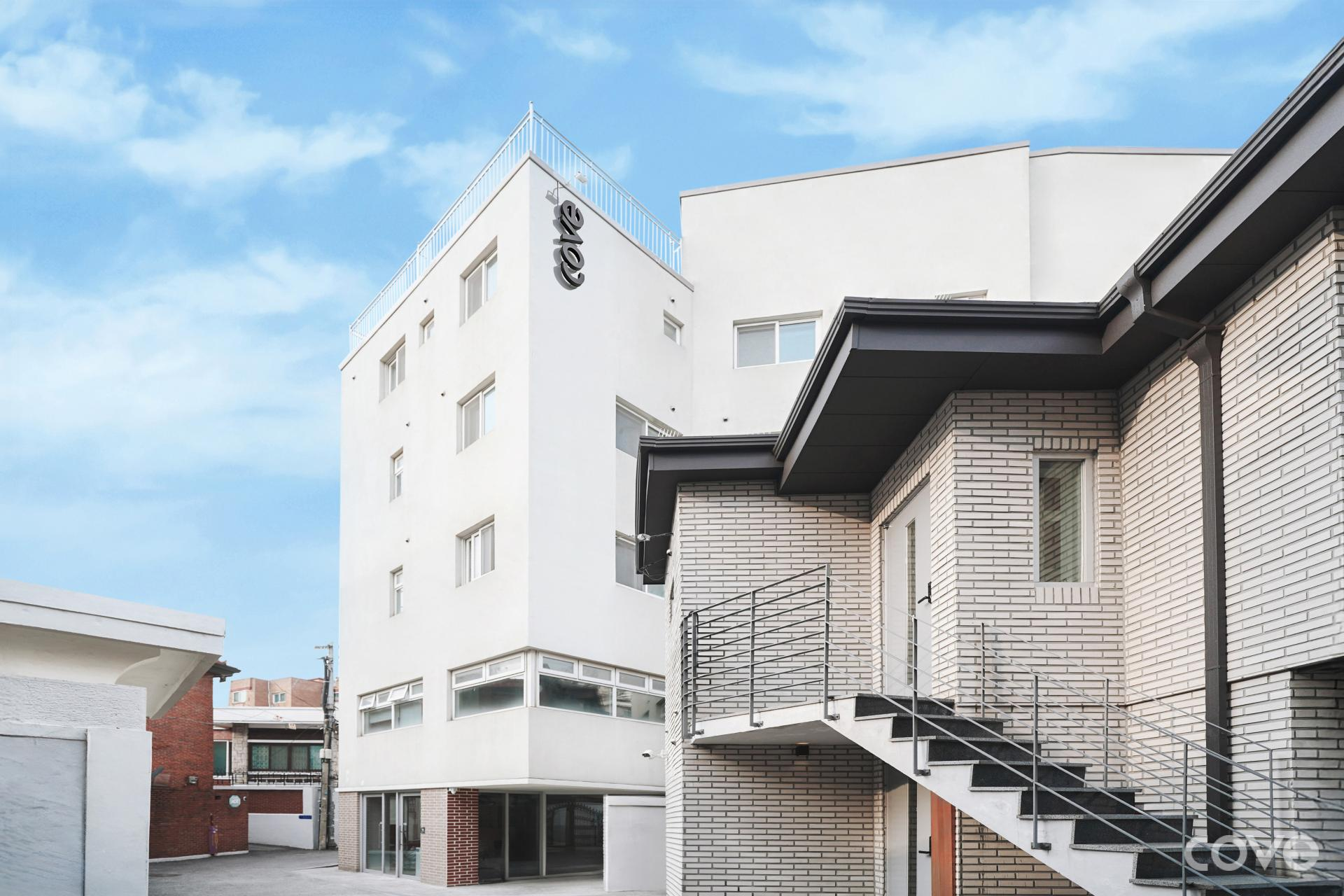
If Yeonnam sounds like your kind of place, Cove has furnished studios in Yeonnam-dong and more in nearby Seongsan-dong, bookable in English with move-in within two weeks.
For the practical side of signing a lease, our guide to renting an apartment in Seoul as a foreigner.