
How to Rent an Apartment in Seoul as a Foreigner (2026 Guide)

Yes, foreigners can legally rent apartments in Seoul. But the process is nothing like what you're used to back home. Deposits are massive, most contracts lock you in for two years, and every piece of paperwork is in Korean. Crucially, because Korean real estate transactions involve large sums of cash, navigating the system safely requires strict attention to local legal frameworks.
Here is how the system actually works, what it costs, and how to protect your money.
Seoul's Rental System: Understanding the Financial Structure
Seoul’s rental market revolves around how your deposit and monthly rent interact. The two primary lease types are Jeonse and Wolse, alongside a hybrid model known as Ban-jeonse.
- Jeonse (전세) – The Lump-Sum Deposit: You hand the landlord a massive deposit (typically 50% to 80% of the property's market value), pay zero monthly rent, and receive the entire deposit back when the lease ends. While financially attractive, the average jeonse across Seoul sits at roughly ₩218 million (approx. $157,000 USD). Because of high capital requirements and recent market volatility, jeonse carries a higher risk profile and is rarely realistic for first-time foreign residents.
- Wolse (월세) – Monthly Rent + Security Deposit: This is the standard choice for most expats. You pay a smaller, upfront deposit combined with a fixed monthly rent payment. For a standard studio, expect a deposit ranging from ₩5 million to ₩10 million. Standard contracts run for two years, though some officetels offer flexible one-year terms.
- Ban-jeonse (반전세) – The Hybrid Model: A middle ground where you provide a mid-sized deposit (₩10 million to ₩30 million) in exchange for a significantly lowered monthly rent. This setup is highly common in modern officetels and villas.
Note on Short-Term Stays: If you are staying in Seoul for less than 12 months, traditional realtors and landlords will rarely accommodate you. You will need to look into alternative housing options like goshiwons, share houses, or flexible co-living spaces.
Rental Types and What They Offer
Most foreign renters begin with housing styles optimized for mobility and urban convenience.
Housing Type | Monthly Rent | Deposit | Best Suited For |
|---|---|---|---|
Officetel (오피스텔) | ₩600K – ₩1.2M | ₩5M – ₩10M | Solo expats, young professionals, digital nomads |
Villa (빌라) | ₩400K – ₩800K | ₩5M – ₩10M | Budget-conscious renters, longer stays |
Apartment (아파트) | ₩1M – ₩3M+ | ₩10M – ₩50M+ | Families, corporate expat packages |
Goshiwon (고시원) | ₩300K – ₩600K | ₩0 | Students, ultra-short flexible stays |
Co-living / Serviced Stays | ₩1M – ₩1.8M | ₩0 – ₩1M | New arrivals needing fully furnished flexibility |
Key Differences to Keep in Mind:
- Officetels: These are modern studio units built directly near subway stations. CRITICAL WARNING: Some officetels are legally registered as commercial office spaces for landlord tax purposes. If a unit is classified as commercial, you cannot complete your address registration there. Because foreigners are legally mandated to report their residence, always confirm that a unit allows address registration before moving forward.
- Villas: Multi-story residential buildings located in quieter neighborhoods. They offer more square footage for your money than officetels but require a closer look at soundproofing, insulation, and building age.
- Goshiwons: These micro-units feature shared kitchens and zero deposits. While affordable, space is extremely limited and quality varies wildly. Always inspect them in person.
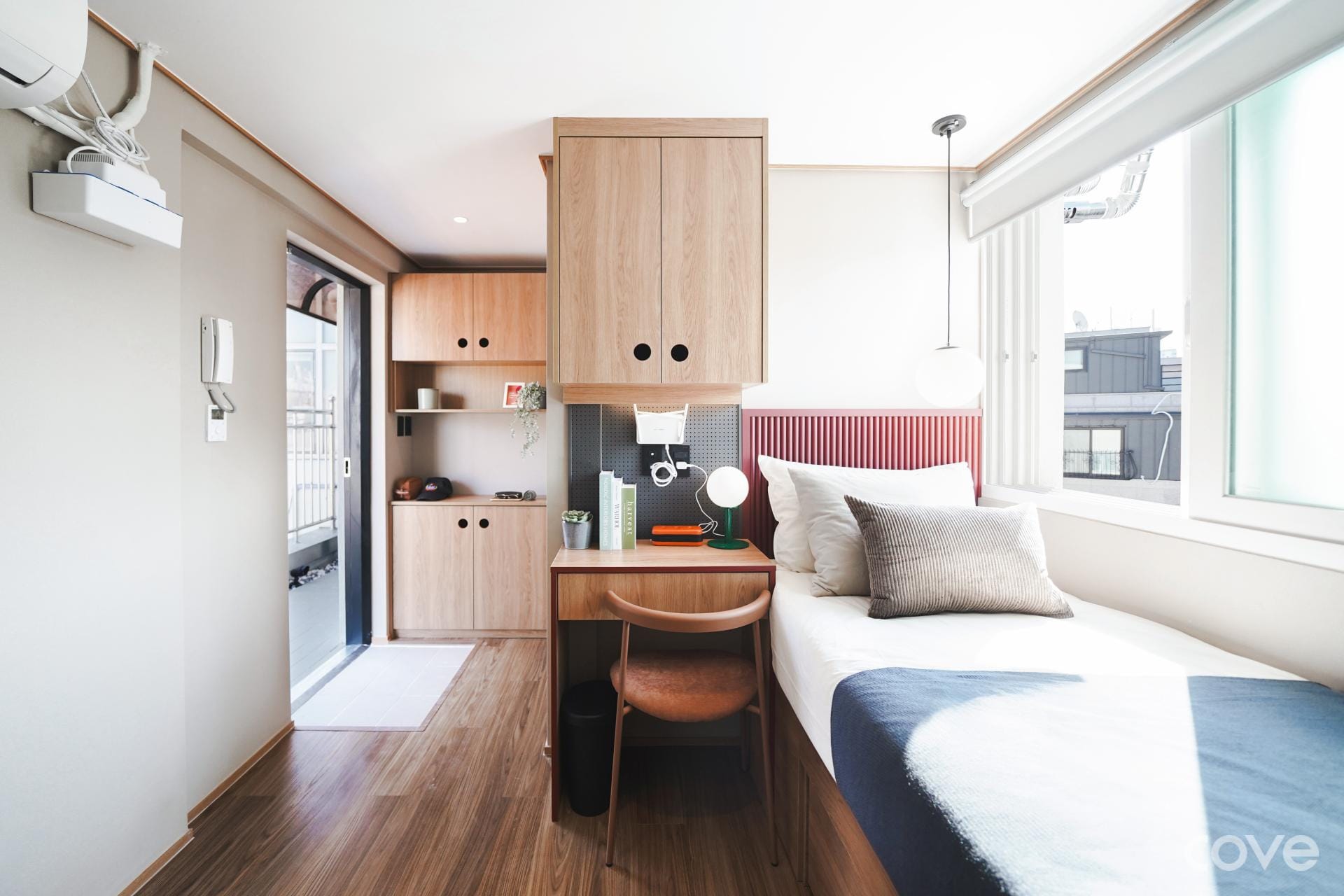
- Co-living Spaces: Brands like Cove offer fully furnished, deposit-free studios in popular areas like Mapo-gu and Seongdong-gu. They allow quick move-ins and passport-only bookings, making them ideal landing pads while you sort out permanent paperwork.
Real World Pricing & Neighborhood Breakdown (2026 Data)
The average studio deposit in Seoul under a wolse agreement sits around ₩10 million. While the citywide average monthly rent for a studio is roughly ₩720,000, prices vary aggressively by district.
Neighborhood / District | Average Studio Rent | District Character & Dynamic |
|---|---|---|
Gangnam / Seocho | ₩1.2M – ₩1.5M+ | Corporate hub, upscale, premium pricing |
Itaewon / Yongsan | ₩1.0M – ₩1.1M | Central, highly international, premium studio market |
Yeonnam-dong / Mapo | ₩700K – ₩1M | Trendy cafe culture, highly popular with young expats |
Hongdae / Sinchon | ₩600K – ₩1M | Major university hub, student-friendly, high energy |
Jongno / Central | ₩400K – ₩700K | Historic center, older housing stock, budget-friendly |
Hidden Costs:
Do not budget based on the advertised monthly rent alone. Modern buildings charge a monthly management fee (관리비 - Gwanlibi) averaging ₩150,000 to ₩200,000 for an officetel. Utilities (gas, electricity, internet) are billed separately and add another ₩100,000 to ₩200,000. Due to localized floor heating systems (ondol), winter gas bills can spike dramatically.
Legal Safety: How to Protect Your Deposit
In South Korea, your deposit is not automatically protected just because you signed a formal document. True security is tied directly to the Housing Lease Protection Act. To ensure your money is safe from landlord insolvency or property foreclosures, you must verify the legal parameters of the property.
- Review the Real Estate Registry (등기부등본 - Deonggibu Deongbon): Before paying any holding fee, ask your broker for a fresh copy of the property's registry extract. Verify that the landlord’s name and resident ID match the contract exactly. Look closely at Section Eul (을구) to ensure there are no heavy pre-existing mortgages or collateral rights on the building that outweigh your deposit value.
- Verify Broker Registration: Only use legally licensed real estate offices (Budongsan). You have the right to request the broker’s registration credentials and a completed Property Explanation Form detailing the unit's exact legal and financial condition.
- Exercise Caution with Power of Attorney: If negotiating with a relative or representative instead of the registered owner, demand a certified power of attorney document, the owner's official seal certificate (인감증명서), and legal identity verification before transferring funds.
The Step-by-Step Rental Process
To ensure absolute legal compliance, you must complete these operational steps in chronological order:
Step 1: Secure Your Alien Registration Card (ARC)
Traditional landlords require a valid residence card (now commonly referred to as the ARC or Residence Card). You must apply at immigration via the Hi Korea portal within 90 days of arrival. Processing typically takes two to three weeks. If you do not have an ARC yet, your options are limited to short-term co-living spaces, goshiwons, or temporary rentals that accept passport-only verification.
Step 2: Establish a Local Korean Bank Account
Rent and security deposits are executed exclusively via local bank transfers. Landlords do not accept international wire transfers or foreign credit cards. To open an account, banks require your passport, your physical ARC, and formal proof of local employment or university enrollment.
Step 3: Set Up a Local Phone Number
To browse local real estate apps or register for contact alerts with brokers, you need a verified Korean phone number. While prepaid SIMs work for basic communication, deep identity verification on major web services requires a postpaid mobile contract tied directly to your ARC.
Step 4: Search and Verify via Local Databases
Use popular local platforms like Zigbang (직방) and Dabang (다방) to get a sense of market inventory, but proceed with caution as misleading listings exist. For true transaction transparency, cross-reference pricing with Naver Real Estate (네이버 부동산). Naver tracks actual registered market transactions, allowing you to quickly spot and avoid overpaying a "foreigner tax."
Step 5: Execute and Review the Contract
Lease agreements are legally binding in Korean. There is no legal requirement for an English copy, so it is vital to have a fluent speaker or professional review the text. Verify the exact deposit amount, monthly rent, management fees, contract duration, and the mandatory move-out notice timeline (typically 30 to 60 days before contract termination).
Step 6: Complete Address Registration & Secure a Fixed Date Stamp
Within 14 days of moving into your new home, you must visit your local community center (주민센터 - Jumin Center) with your passport, ARC, and physical lease contract. Alternatively, this can be done online through the Gov.kr portal if you have a recognized digital certificate.
- File your Change of Residence Report (전입신고 - Jeonipsingo) to update your legal address.
- Simultaneously request a Fixed Date Stamp (확정일자 - Hwakjeong Ilja) on your lease contract.
Why this matters: Under the Korean Housing Lease Protection framework, completing your address registration combined with a Fixed Date Stamp grants you opposable power (대항력). This gives you legal priority over unsecured creditors to recover your security deposit if the property ever enters public auction or faces financial distress.
Common Roadblocks to Anticipate
- Landlord Hesitation: Certain traditional landlords refuse foreign tenants due to language barriers or concerns regarding visa lengths. Working with a registered Global Real Estate Agency (a network of multilingual brokers officially designated by the Seoul Metropolitan Government) can completely bypass this issue.
- Unfurnished Units: While studios and officetels usually feature major appliances (refrigerator, washing machine), roughly 70% of family-sized apartments are rented entirely empty. Factor furniture acquisition into your initial budget if renting a larger home.
- Legal Age Requirements: Under the South Korean Civil Act, legal adulthood begins at age 19. If you are 18 or younger, signing an independent residential lease is highly complex and requires verified signatures from a legal guardian.